The Difference Between Knowing What vs Knowing When
Dec 29, 2025
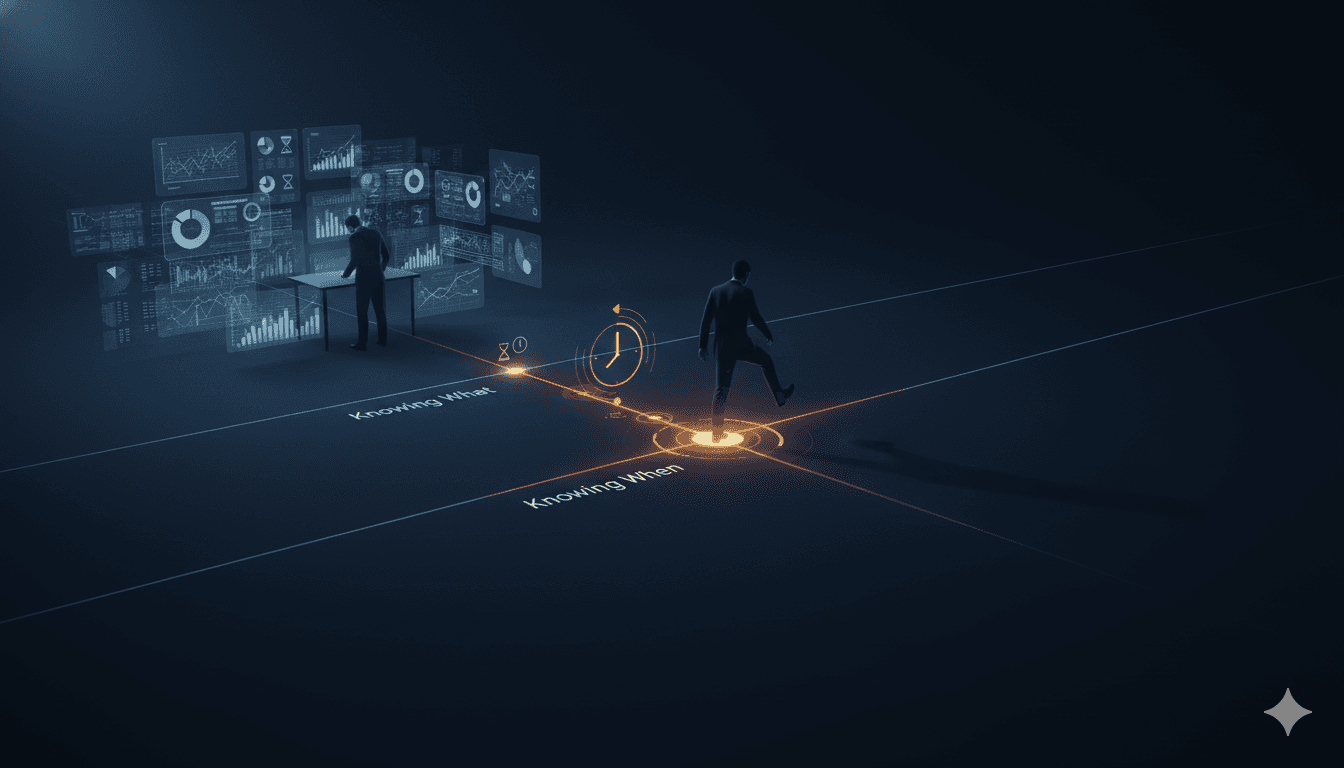
Knowing what gives you information
Knowing when gives you leverage.
Most systems are designed to answer what:
what the data says
what the trend is
what the probability looks like
Very few systems teach when:
when action carries asymmetric advantage
when waiting is the optimal decision
when intervention will backfire
when restraint preserves leverage
This imbalance creates constant activity without meaningful progress. People act frequently, but effectively less often.
Temporal Intelligence bridges this gap by recognizing that information does not expire evenly. Its usefulness is time-bound. Insight that is valuable now may be useless later or dangerous earlier.
Knowing when transforms decision making from reactive to intentional. It allows individuals and institutions to:
wait without fear
act without urgency
commit without overexposure
Action without timing becomes noise. Timing without action becomes wasted insight.
Temporal Intelligence unifies both by anchoring action to readiness. It teaches that leverage does not come from knowing more, but from acting at the right moment.
In time-based systems, expertise is not defined by how often someone acts, but by how consistently they act within valid windows.
Knowing what informs.
Knowing when empowers.